• Skip to primary navigation
  • Skip to main content
  • Skip to primary sidebar
  • Skip to footer

FAIR

  • Find Answers
  • Blog
  • Media & Apps
  • Conference
  • Bookstore
  • Archive
  • About
  • Get Involved
  • Search

FAIR Staff

Faith and Reason 18: Names in The Book of Mormon

August 28, 2014 by FAIR Staff

https://media.blubrry.com/mormonfaircast/www.fairlatterdaysaints.org/wp-content/uploads/2014/08/Evidence-17.mp3

Podcast: Download (15.0MB)

Subscribe: RSS

From the Book: 80 Evidences Supporting the Prophet Joseph Smith

by Michael R. Ash

Critics typically contend that Joseph Smith either invented the names in the Book of Mormon or borrowed them from his surroundings. The first name mentioned in the Nephite record is Nephi. We find this name in the Apocrypha. The Apocrypha are part of the Catholic collection of scriptures, but are not included in the Protestant scriptures such as the King James Version Bible. Whether Joseph has access to the Apocrypha in 1829 is unknown.

Sariah was Lehi’s faithful wife who endured so much tribulation during their journey through the Arabian Peninsula. Dr. Jeffrey Chadwick, who holds a PhD in Archaeology and Semitic Languages, believes that a likely Hebrew spelling of Sariah would be s’ryh and would be pronounced something like Sar-yah. The name s’ryh has been found on ancient Aramaic papyri in Egypt, dating to the time of Lehi, which was not discovered until the twentieth century. Although the language of the document is Aramaic, the name, it has been shown, is Hebrew. Non-Mormon scholars have translated this part of the papyri as “Sariah daughter of Hoshea son of Harman”.

Many critics have laughed at the Book of Mormon for using “Alma” as a masculine personal name. In the United States, Alma is typically a female name of Latin origin. Alma-mater, for example, means “nourishing mother” and was used during medieval times to refer to the Virgin Mary. In the late twentieth century, however, it was found that some ancient Near Eastern documents –such as letters from Bar Kokhba and clay tablets from Ebla –contained the male name “Alma”.

With the exception of Alma, the few times that the critics have mentioned Book of Mormon names has been to ridicule them as strange and obviously created by Joseph Smith. One critic wrote: “It required something of a genius, it must be confessed, to manufacture some of the names of the Book of Mormon… names that at least have a certain syllabic jingle, if they have no meaning”. As light is shed on all areas of Book of Mormon studies, however, we gain new support for the names found in the Nephite scripture.

Many Book of Mormon names, we find, have Near Eastern parallels, several of which are Egyptian. Dr. Hugh Nibley wrote: “It should be noted that archaeology has fully demonstrated that the Israelites, then as now, had not the slightest aversion to giving their children non-Jewish names, even when those names smacked of a pagan background. Recently discovered ancient manuscripts who that many Jews in the days of Lehi names their children after Egyptian hero kings of the past.

For a time, Mormon scholars were confused as to why the Book of Mormon does not include a single name containing the element of Baal, which is so common in the Old Testament. The recent discovery of the Elephantine papyrus from Egypt shows that Israelites eliminated all names with Baal elements during Lehi’s day. Of the over four hundred names among the Elephantine manuscripts, not one is compounded of Baal.

“It is no small feat,” writes Nibley, “simply to have picked a lot of strange and original names out of the air. But what shall we say of the man who was able to pick the right ones?”.

Michael R. Ash is the author of: Of Faith and Reason: 80 Evidences Supporting The Prophet Joseph Smith. He is the owner and operator of MormonFortress.com and is on the management team for FairMormon. He has been published in Sunstone, Dialogue: A Journal of Mormon Thought, the Maxwell Institute’s FARMS Review, and is the author of Shaken Faith Syndrome: Strengthening One’s Testimony in the Face of Criticism and Doubt. He and his wife live in Ogden, Utah, and have three daughters.

Julianne Dehlin Hatton  is a broadcast journalist living in Louisville, Kentucky. She has worked as a News Director at an NPR affiliate, Radio and Television Host, and Airborne Traffic Reporter. She graduated with an MSSc from the Maxwell School of Citizenship and Public Affairs at Syracuse University in 2008. Julianne and her husband Thomas are the parents of four children.

Music for Faith and Reason is provided by Arthur Hatton.

Filed Under: Uncategorized

Truth, Subjectivity, and History

August 24, 2014 by FAIR Staff

scripture-study-243080-galleryWritten by Stephen Trayner

I was recently drawn into a fascinating discussion of truth and history. I have always loved history. In part, my love of history led to my study of political science and a career in law. A recent online post I read started with an invitation to learn the history of The Church of Jesus Christ of Latter-day Saints. I have read posts of others questioning, “How can a person can be active in The Church of Jesus Christ of Latter-day Saints in view of the history of the Church and the different beliefs held and practiced by the Church?”

I have spent the majority of my life investigating, researching, sorting through, and evaluating “facts.” John Adams stated, “Facts are stubborn things; and whatever may be our wishes, our inclinations, or the dictates of our passion, they cannot alter the state of facts and evidence.” I too have found facts, including historical facts, to be stubborn things. It has been my professional experience that witnesses to events sometimes misperceive, mis-recall, and even misstate facts for a variety of reasons. I have seen witnesses testify under oath inconsistently with one another, both claiming to have seen and recalled an event. Likewise, I have had witnesses, who after the passage of time, recall events memorialized in photographs and contemporary documents in a manner inconsistent with that unquestioned photographic and documentary proof.

The philosopher Voltaire assailed history as being “a pack of lies we play upon the dead.” While Voltaire’s view may be extreme, it is clear that an element of subjectivity is inherent in investigating and retelling history. Subjectivity may also play a role in our study of history, despite the reader/investigator’s best intentions and desires. The student of history may unconsciously allow the present to influence his or her knowledge or interpretation of past historical events. (An interesting article on the problem of bias in the study of history can be found online.)

Knowing the inherent limitations in the recording (and studying) of the history, including the true and unbiased context in which past events may have occurred, religious scholarship and discipleship often require consideration of and sifting through potentially contravening and contradictory evidence. To find eternal truths, especially historical religious truths, the seeker or disciple must turn to the Author of truth, knowing that He will give knowledge to all men liberally in response to the proper exercise of faith and study.

The seeker of eternal truths soon understands that His ways are not necessarily our ways, nor our thoughts, His thoughts. At times, we may struggle to understand how a loving God could send floods to cover the earth, plagues to afflict the disobedient, direct His chosen leaders to take multiple wives, or order the death of evil men. At times, we may struggle to understand how the use of spittle could restore the sight of one who was blind (Mark 8:22–25), how Jordan’s waters could heal the leper (2 Kings 5), or how the mere touch of the hem of His garment could heal the infirm (Matthew 9:20–22). We may even struggle to understand the importance of His teaching to Thomas, “blessed are they that have not seen, and yet have believed” (John 20:29). Faith is often born as we ”learn to walk to the edge of the light, and then a few steps into the darkness; then the light will appear and show the way before you” (source). He encourages us to “dispute not” in part because we often do not receive a witness of the truth until after the trial of our faith (Ether 12:6). Having spent a lifetime in search of religious truth based upon facts and the Spirit, I think it is fair to say that the Church and faithful third parties have provided well researched and scholarly responses to each of the matters currently in discussion and debate. History is not to be feared. History can and does build faith.

The Church in recent months has addressed a number of doctrinal and historical issues raised in recent years concerning variety of topics largely by those openly opposed to the Church. The Church’s responses are found in its “Gospel Topics” website. While detractors may choose to assert that such statements are evidence of a “cover up,” others may rightfully assert that such official statements are merely the result of a need to address clear and unequivocal falsehoods which have been raised and disseminated against the Church on a broad scale due to the influence of the Internet.

Some may ask, “Why would God allow such claims to be so prevalent in our day? Why would God allow His work to be opposed by such vocal and persistent voices of dissent and doubt?” I think there are reasons for this. As darkness approaches and as dissenting voices ring out, we must turn to Him for understanding and truth. Ultimately a testimony of the restored gospel of Jesus Christ comes down to one’s testimony and conversion born of the Holy Ghost. The Savior’s ministry was notable for open and fierce opposition to Him personally as well as His teachings. The Lord’s people and His servants have always been the object of false persecution and claims. His ways were not the ways of the people of His day. His teachings were not well accepted by the masses. Some even questioned his history. Many asked, “Is not this the carpenter, the son of Mary, the brother of James, and Joses, and of Juda, and Simon? and are not his sisters here with us? And they were offended at him” (Mark 6:3).

Such opposing forces led directly to His crucifixion and the persecution of His early church, its teachings, its leaders, and its members. The world soon fell into a great apostasy and spiritual darkness. The world rejected the Light of the world. I testify that the ensuing darkness was not dispelled until the spring of 1820 when He answered a young boy’s prayer and the work of the restoration of His truths, priesthood authority, and Church commenced anew. That boy, Joseph Smith, became God’s prophet. Even after the restoration of His gospel in these modern days, similar forces continue to oppose God’s truths, Church, and people.

Faith is a personal matter between God and each and every one of His children. I choose to believe. I have felt His spirit bear witness to my soul of the truthfulness of my beliefs. I know His Son lives and is my Redeemer. His truths set me free each day. I pray for those who stumble in darkness, those whose faith and light may be weak, and those whose faith once bright has faltered. I pray for those who choose not to believe. They are my brothers and sisters.
I bear my witness that The Church of Jesus Christ of Latter-day Saints is God’s kingdom here on earth and is led by a living prophet. Christ stands at the head of His Church today. His invitation to all to come unto Him has not and will not change.

I close with the words of one of His modern day Apostles, which I know to be true. Elder Russell M. Nelson said, “Even more amazing than modern technology is our opportunity to access information directly from heaven, without hardware, software, or monthly service fees. It is one of the most marvelous gifts the Lord has offered to mortals. It is His generous invitation to ‘ask, and it shall be given you; seek, and ye shall find; knock, and it shall be opened unto you.'”

This timeless offer of personal revelation is extended to all of His children. It almost sounds too good to be true. But it is true!

Filed Under: Apologetics, Faith Crisis, General

Faith and Reason 17: “Reformed Egyptian”

August 21, 2014 by FAIR Staff

https://media.blubrry.com/mormonfaircast/www.fairlatterdaysaints.org/wp-content/uploads/2014/08/Evidence-16.mp3

Podcast: Download (5.9MB)

Subscribe: RSS


From the book:  Of Faith and Reason: 80 Evidences Supporting the Prophet Joseph Smith

by Michael R. Ash

Near the beginning of the Book of Mormon, Nephi tells his readers that the record was written in “the language of my father, which consists of the learning of the Jews and the language of the Egyptians” (1 Nephi 1:2) Critics have asserted for years that there is no such thing as reformed Egyptian, and even if there were, devout Israelites such as Lehi would not have written scripture in a pagan Egyptian script but would have only used Hebrew.

Nearly fifty years ago, Hugh Nibley showed that the Egyptian culture played an influential role in seventy century BC Palestine –primarily in the area of culture and language. Modern studies verify that Nibley was right. Recently rediscovered writings from approximately Lehi’s day tell us that Jews and other foreigners were all instructed in the language of Egypt. We now know of other Hebrew and Aramaic texts –such as Papyrus Amherst 63 –that were written in Egyptian characters.

Also discovered a decade ago, were ancient potsherds from Lehi’s vicinity and time, that contained a script composed of a modified form of Egyptian hieroglyphics. This script was used almost exclusively by Israel and not any of the neighboring communities. Some Near Eastern scholars now believe that scribes and students in Lehi’s day were trained in both Hebrew and Egyptian writing systems.

Michael R. Ash is the author of: Of Faith and Reason: 80 Evidences Supporting The Prophet Joseph Smith. He is the owner and operator of MormonFortress.com and is on the management team for FairMormon. He has been published in Sunstone, Dialogue: A Journal of Mormon Thought, the Maxwell Institute’s FARMS Review, and is the author of Shaken Faith Syndrome: Strengthening One’s Testimony in the Face of Criticism and Doubt. He and his wife live in Ogden, Utah, and have three daughters.

Julianne Dehlin Hatton  is a broadcast journalist living in Louisville, Kentucky. She has worked as a News Director at an NPR affiliate, Radio and Television Host, and Airborne Traffic Reporter. She graduated with an MSSc from the Maxwell School of Citizenship and Public Affairs at Syracuse University in 2008. Julianne and her husband Thomas are the parents of four children.

Music for Faith and Reason is provided by Arthur Hatton.

 

Filed Under: Uncategorized

How Joseph Smith Translated the Book of Abraham

August 21, 2014 by FAIR Staff

photo1

By Kerry Muhlestein

For most people, the idea of translating is fairly straightforward. Conventionally, when someone translates, he reads a document in one language he understands and renders it into another language he understands. The difficulty in assessing the Book of Abraham is that while Joseph Smith says he translated the Book of Abraham from papyrus, he never uses that word in the conventional way. It will be helpful to first look at the other ways Joseph Smith used the word “translate.”

Joseph Smith’s first translation project was the Book of Mormon. It was written in a language he clearly did not know. He never claimed to understand the language it was written in. Instead, he said he was given the ability to translate by the gift and power of God. We don’t know a lot about the Book of Mormon translation process. We know that the Prophet used the seer stones we call the Urim and Thummim, as well as another seer stone he often used. While we cannot nail down the exact details, it seems he often was not looking at the gold plates at all during much of this process. What we can be sure of is that Joseph Smith provided us with a translation of a language he did not know, frequently without referring to the physical text he had. His translation came from God.

To read this article in its entirety, please visit the Meridian Magazine website.

Filed Under: Book of Abraham

Faith and Reason 16: “It Came to Pass,” Part One

August 14, 2014 by FAIR Staff

https://media.blubrry.com/mormonfaircast/www.fairlatterdaysaints.org/wp-content/uploads/2014/08/Evidence-15.mp3

Podcast: Download (3.6MB)

Subscribe: RSS

From the Book: Of Faith and Reason: 80 Evidences Supporting the Prophet Joseph Smith

by Michael R. Ash

The Book of Mormon’s frequent use of the phrase “and it came to pass” has been the target of much ridicule. Mark Twain claimed this was Smith’s “pet phrase” and had Smith left it out, the Book of Mormon “would have been only a pamphlet”. Another critic asserted that the Book of Mormon, “is cursed with the clumsy, repetitious phrase ‘and it came to pass’ that appears hundreds of times in the book, on almost every page”. Neith Mark Twain nor Joseph Smith would have known in the nineteenth century just how important this phrase was to Book of Mormon authors.

The original manuscript of the Book of Mormon had no punctuation. Likewise, manuscripts prior to the tenth century typically had no punctuation. In both ancient Eqyptian and Hebrew, indicator phrases such as “it came to pass”, “and now”, “and thus”, were grammatically necessary to denote new thoughts or paragraphs. Since the Book of Mormon claims to be written in a modified Hebrew language and “reformed” or modified Egyptian characters it would be strange if it didn’t contain such phrases.

Michael R. Ash is the author of: Of Faith and Reason: 80 Evidences Supporting The Prophet Joseph Smith. He is the owner and operator of MormonFortress.com and is on the management team for FairMormon. He has been published in Sunstone, Dialogue: A Journal of Mormon Thought, the Maxwell Institute’s FARMS Review, and is the author of Shaken Faith Syndrome: Strengthening One’s Testimony in the Face of Criticism and Doubt. He and his wife live in Ogden, Utah, and have three daughters.

Julianne Dehlin Hatton  is a broadcast journalist living in Louisville, Kentucky. She has worked as a News Director at an NPR affiliate, Radio and Television Host, and Airborne Traffic Reporter. She graduated with an MSSc from the Maxwell School of Citizenship and Public Affairs at Syracuse University in 2008. Julianne and her husband Thomas are the parents of four children.

Music for Faith and Reason is provided by Arthur Hatton.
 

Filed Under: Uncategorized

Faith and Reason 15: The “Rent” Garment, Part 1

August 7, 2014 by FAIR Staff

https://media.blubrry.com/mormonfaircast/www.fairlatterdaysaints.org/wp-content/uploads/2014/08/Evidence-14.mp3

Podcast: Download (4.5MB)

Subscribe: RSS

From the book: Of Faith and Reason: 80 Evidences Supporting the Prophet Joseph Smith

By Michael R. Ash

In Alma 46 we read that Captain Moroni made a “banner of liberty” from his rent coat. In the original edition of the Book of Mormon we read: “And when Moroni had said these words, he went forth among the people, waving the rent of his garment in the air, that all might see the writing which he had wrote upon the rent, and crying with a loud voice…” (italics added).

For clarification and to improve the grammar, the current edition of the Book of Mormon reads: And when Moroni had said these words, he went forth among the people, waving the rent part of his garment in the air, that all might see the writing which he had written upon the rent part, and crying with a loud voice…” (Alma 46:19; italics added).

Critics have laughed at the original version for more than a century. To them, this was one more proof that the unsophisticated Joseph Smith wrote –rather than translated –the Book of Mormon. How can a “rent” be written upon?

In Hebrew, the word qera’ –which is translated as a noun for a “rent part” –derives from the Hebrew qara’ which is the verb form and means “he rent, tore”. This word also translates in a manner that makes “rent” a noun –just as we find in Alma 46.

Michael R. Ash is the author of: Of Faith and Reason: 80 Evidences Supporting The Prophet Joseph Smith. He is the owner and operator of MormonFortress.com and is on the management team for FairMormon. He has been published in Sunstone, Dialogue: A Journal of Mormon Thought, the Maxwell Institute’s FARMS Review, and is the author of Shaken Faith Syndrome: Strengthening One’s Testimony in the Face of Criticism and Doubt. He and his wife live in Ogden, Utah, and have three daughters.

Julianne Dehlin Hatton  is a broadcast journalist living in Louisville, Kentucky. She has worked as a News Director at an NPR affiliate, Radio and Television Host, and Airborne Traffic Reporter. She graduated with an MSSc from the Maxwell School of Citizenship and Public Affairs at Syracuse University in 2008. Julianne and her husband Thomas are the parents of four children.

Music for Faith and Reason is provided by Arthur Hatton.


Filed Under: Uncategorized

Faulty Assumptions about the Book of Abraham

August 7, 2014 by FAIR Staff

Abraham

[Written by Kerry Muhlestein]

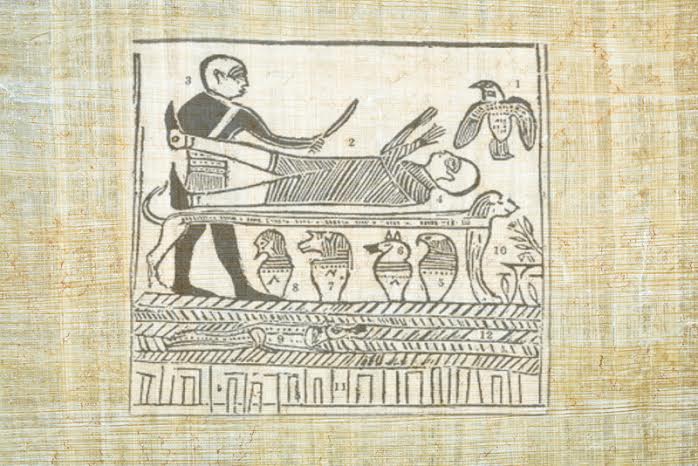
As was mentioned in the last column (link to column here), it was almost universally assumed that all of the papyri Joseph Smith had once owned had been destroyed in the Great Chicago Fire of 1871. Thus many were surprised when the papyri surfaced in 1967. One of the papyri fragments contained the drawing which was the original source of Facsimile One. This papyrus drew the most immediate interest.[i]

Part of the reason this fragment drew so much attention was because of the possibilities it suggested. It seemed that perhaps we could now test Joseph Smith’s revelatory abilities. Many members of the LDS Church assumed that the text on the papyri which surrounded the original of Facsimile One was the source of the Book of Abraham.

This may give them to chance to demonstrate Joseph Smith’s prophetic abilities. Anti-Mormons also assumed that the text adjacent to that drawing was the source of the Book of Abraham and were excited about the opportunity to disprove Joseph Smith’s prophetic abilities.[ii] Sadly, neither of these groups took the time to carefully and rigorously examine their assumptions. Thus, when the text was translated and we learned that it was a fairly common Egyptian funerary document called the Book of Breathings, many felt that they could now demonstrate that Joseph Smith was not an inspired translator.

[To continue reading this article, please visit the Meridian Magazine website by following this link.]

Filed Under: Book of Abraham, LDS Scriptures

Eborn Books Author Presentation: “What Did Joseph Smith Know about LDS Temple Ordinances by 1836?”

August 6, 2014 by FAIR Staff

Jeffrey M. Bradshaw
Jeffrey M. Bradshaw

Directly after the FairMormon Conference on Friday, Jeffrey M. Bradshaw will be presenting at Eborn Books in Salt Lake City on the topic “What Did Joseph Smith Know about LDS Temple Ordinances by 1836?” The details of the presentation are below.

FRIDAY, AUGUST 8, 7 PM–8:30 PM + Q&A.

Jeffrey M. Bradshaw will be giving a presentation at Eborn Books this coming Friday, August 8, in Salt Lake City. His topic is “What Did Joseph Smith Know about LDS Temple Ordinances by 1836?”

It is increasingly apparent that Joseph Smith’s early revelations and teachings evince a detailed understanding of concepts relating to temple worship. In this presentation, I will summarize precedents for LDS temple ordinances, both in antiquity and in the revelations and teachings of Joseph Smith through 1836. I will focus on three major items: 1. the backbone of narrative and covenants that relate to the liturgy of the LDS temple endowment, as revealed in 1830-1831; 2. prominent priesthood symbols associated with temple-related concepts for which we have evidence going back as far as 1826; and 3. the full sequence of blessings associated with the oath and covenant of the priesthood, given in 1832. In discussing these matters, I will be respectful of the sacred nature of LDS temple ordinances.

Bradshaw is the author of several books including the very popular and well-selling masterpiece IN GOD’S IMAGE AND LIKENESS – Enoch, Noah and the Tower of Babel.

Due to the tremendous amount of wonderful material collected by Brother Bradshaw, the presentation is expected to last an hour and a half, with Q&A afterwards.

Date: 8 August 2014, 7:00 PM
Place: 254 S. Main Street, Salt Lake City, UT 84101

About the Author:

Bradshaw and his wife Kathleen are the parents of four children. He is an active member of LDS Church). He was a missionary in France and Belgium from 1975–1977, and has since returned with his family twice to live in France: once from 1993-1994 as part of a Fulbright fellowship and a second time from 2005-2006 as a sabbatical in the aftermath of Hurricane Ivan. Among other publications on LDS temples and the ancient Near East, he published two highly-acclaimed commentaries on the Book of Moses: In God’s Image and Likeness 1: Ancient and Modern Perspectives on the Book of Moses, which covers Moses 1-6:12, and In God’s Image and Likeness 2: Enoch, Noah, and the Tower of Babel, which covers the story recounted in Moses 6:13-8:30. He is a regular contributor to Meridian Magazine and currently maintains a blog entitled “Temple Themes in the Scriptures”. He is a vice president for The Interpreter Foundation and a member of the Advisory Board for the Academy for Temple Studies. Bradshaw has served twice as a bishop in The Church of Jesus Christ of Latter-day Saints, and currently serves as a counselor in the stake presidency of the Pensacola Florida Stake. He is also the author of Temple Themes in the Book of Moses and Temple Themes in the Oath and Covenant of the Priesthood. He has also contributed articles in BYU Studies and other publications.

Bret & Cindy Eborn
Eborn Books
254 S. Main St., Salt Lake City, UT 84101
801-359-0460

Eborn Books in Salt Lake City
Eborn Books in Salt Lake City.

Filed Under: News from FAIR, Temples

FairMormon Volunteers on Drive Time Radio Program

August 5, 2014 by FAIR Staff

neal-rappleye
Neal Rappleye
stephen-smoot2
Stephen Smoot

Two FairMormon volunteers, Neal Rappleye and Stephen Smoot, appeared on Mills Crenshaw’s radio program Drive Time on August 5, 2014. They discussed the upcoming FairMormon conference and took questions from callers on a number of topics. For further information on the upcoming FairMormon conference, visit our conference webpage at this link.

https://www.fairmormon.org/wp-content/uploads/2014/08/2014-0805-NEAL-RAPPLEYE-and-STEPHEN-SMOOT-of-FAIR-MORMON-Blog.mp3

(The segment of the show with Rappleye and Smoot runs until 01:52:20.)

Filed Under: Uncategorized

Faith and Reason 14: Chiasmus in The Book of Mormon

August 2, 2014 by FAIR Staff

https://media.blubrry.com/mormonfaircast/www.fairlatterdaysaints.org/wp-content/uploads/2014/08/Evidence-11.mp3

Podcast: Download (10.0MB)

Subscribe: RSS

From the book: Of Faith and Reason: 80 Evidences Supporting the Prophet Joseph Smith

by Michael R. Ash

Chiasmus was practically unknown in the United States when the Book of Mormon was published. However, if by chance, Joseph Smith had some sort of scholarly knowledge unavailable to the typical frontiersman, how did he find time –during the seventy or so days of translating –to create such complex chiastic structures? The presence of chiasmus in the Book of Mormon lends support to the claim that the book is based on an authentic ancient text.

Michael R. Ash is the author of: Of Faith and Reason: 80 Evidences Supporting The Prophet Joseph Smith. He is the owner and operator of MormonFortress.com and is on the management team for FairMormon. He has been published in Sunstone, Dialogue: A Journal of Mormon Thought, the Maxwell Institute’s FARMS Review, and is the author of Shaken Faith Syndrome: Strengthening One’s Testimony in the Face of Criticism and Doubt. He and his wife live in Ogden, Utah, and have three daughters.

Julianne Dehlin Hatton  is a broadcast journalist living in Louisville, Kentucky. She has worked as a News Director at an NPR affiliate, Radio and Television Host, and Airborne Traffic Reporter. She graduated with an MSSc from the Maxwell School of Citizenship and Public Affairs at Syracuse University in 2008. Julianne and her husband Thomas are the parents of four children.

Music for Faith and Reason is provided by Arthur Hatton.

 

Filed Under: Uncategorized

  • « Go to Previous Page
  • Go to page 1
  • Interim pages omitted …
  • Go to page 22
  • Go to page 23
  • Go to page 24
  • Go to page 25
  • Go to page 26
  • Go to page 27
  • Go to Next Page »

Primary Sidebar

Faithful Study Resources for Come, Follow Me

Subscribe to Blog

Enter your email address:

Subscribe to Podcast

Podcast icon
Subscribe to podcast in iTunes
Subscribe to podcast elsewhere
Listen with FAIR app
Android app on Google Play Download on the App Store

Pages

  • Blog Guidelines

FAIR Latest

  • Come, Follow Me with FAIR – The Articles of Faith and Official Declarations 1 and 2 – Part 2 – Autumn Dickson
  • Come, Follow Me with FAIR – The Articles of Faith and Official Declarations 1 and 2 – Part 1 – Autumn Dickson
  • The Lord Is Hastening His Work
  • Come, Follow Me with FAIR – Doctrine and Covenants 137–138 – Part 2 – Autumn Dickson
  • Come, Follow Me with FAIR – Doctrine and Covenants 137–138 – Mike Parker

Blog Categories

Recent Comments

  • Nalo on Come, Follow Me with FAIR – The Articles of Faith and Official Declarations 1 and 2 – Part 2 – Autumn Dickson
  • Diana on Come, Follow Me with FAIR – Doctrine and Covenants 132 – Mike Parker
  • JC on The Lord Is Hastening His Work
  • LHL on Come, Follow Me with FAIR – Doctrine and Covenants 132 – Mike Parker
  • Stephen Johnsen on Come, Follow Me with FAIR – Doctrine and Covenants 132 – Mike Parker

Archives

Follow Us

  • Facebook
  • Twitter
  • iTunes
  • YouTube
Android app on Google Play Download on the App Store

Footer

FairMormon Logo

FAIR is a non-profit organization dedicated to providing well-documented answers to criticisms of the doctrine, practice, and history of The Church of Jesus Christ of Latter-day Saints.

Donate to FAIR

We are a volunteer organization. We invite you to give back.

Donate Now

Site Footer