• Skip to primary navigation
  • Skip to main content
  • Skip to primary sidebar
  • Skip to footer

FAIR

  • Find Answers
  • Blog
  • Media & Apps
  • Conference
  • Bookstore
  • Archive
  • About
  • Get Involved
  • Search

FAIR Staff

LGBT Youth Suicides: What Needs to Change

November 3, 2017 by FAIR Staff

This is a guest post from Debra Oaks Coe, who is a member of the Executive Committee of the Utah Commission for LGBT Suicide Awareness and Prevention and Lead of the Anti-Discrimination Committee for Mormon Women for Ethical Government.
“What is changing – and what needs to change – is to help Church members respond sensitively and thoughtfully where they encounter same-sex attraction in their own families, among other Church members, or elsewhere”. [1] Elder Dallin H. Oaks

The unprecedented rise in Utah’s youth suicide rate over the past decade has developed into an uncertain political issue as its underlying causes have been debated. Some have questioned what possible influence the Church has had, particularly in regards to suicides among individuals who are LGBT. While a no conclusive or singular cause has yet been identified, the Church has long and repeatedly urged Latter-day Saints to be more mindful, considerate, and inclusive as part of needed change.

Citing misunderstanding—including among Church members—of the Church’s positions on various issues related to same-sex attraction, Elder Oaks authored an Ensign article on the topic in 1995. In it, he quoted a letter he had received expressing serious concern that too often we talk about gay and lesbian members with “a real lack of the pure love of Christ” which “creates more depression and a tremendous amount of guilt, shame, and lack of self-worth.” The author asks for more sensitivity saying this “would surely help avoid suicides and schisms that are caused within families.” [2]
Elder Oaks then admonished Latter-day Saints regarding these concerns:

“These communications surely show the need for improvement in our communication… Each member of Christ’s church has a clear-cut doctrinal responsibility to show forth love and to extend help and understanding…  All should understand that persons (and their family members) struggling with the burden of same-sex attraction are in special need of the love and encouragement that is a clear responsibility of Church members, who have signified by covenant their willingness “to bear one another’s burdens” (Mosiah 18:8) ‘and so fulfil the law of Christ’ (Gal. 6:2).” [3]

Over the next several years, the Church and its leaders made many statements affirming that their stand on traditional marriage should never, ever be used to justify unkindness or persecution toward the LGBT community or individuals. After confirmed reports from different parts of the US of violent acts along with suicides related to individuals being gay, the church issued a very clear statement in October 2010.

“We join our voice with others in unreserved condemnation of acts of cruelty or attempts to belittle or mock any group or individual that is different – whether those differences arise from race, religion, mental challenges, social status, sexual orientation or for any other reason. Such actions simply have no place in our society.

…Our parents, young adults, teens and children should… of all people, be especially sensitive to the vulnerable in society and be willing to speak out against bullying or intimidation whenever it occurs, including unkindness toward those who are attracted to others of the same sex. This is particularly so in our Latter-day Saint congregations. Each Latter-day Saint family and individual should carefully consider whether their attitudes and actions toward others properly reflect Jesus Christ’s second great commandment, to “Love One Another.” [4]

The Church began an extended effort to better understand the challenges members who are gay face, as well as the challenges their families face. It explored how to help members respond better.

In April 2012 General Conference, Elder Oaks delivered a talk titled “Protect the Children” In it, he encouraged members to be more mindful of how their words might adversely impact young people. He specifically mentioned those with same-sex attraction as being particularly vulnerable and their need of loving understanding.

Making a child or youth feel worthless, unloved, or unwanted can inflict serious and long-lasting injury on his or her emotional well-being and development. Young people struggling with any exceptional condition, including same-gender attraction, are particularly vulnerable and need loving understanding—not bullying or ostracism. With the help of the Lord, we can repent and change and be more loving and helpful to children – our own and those around us.[5]

In December of 2012, the Church published mormonsandgays.org. The new official Church website included interviews with three apostles, including Elder Oaks, Elder Christofferson, and Elder Cook. It encouraged understanding and prominently called for us to “love one another.” This website gave the quote from Elder Oaks, expressing the need for Church members to respond more sensitively and thoughtfully. It encouraged humility and stated that “Latter-day Saints recognize the enormous complexity of the matter. We simply don’t have all the answers.” [6]

On this website, Elder Cook reminded us that as a Church nobody should be more loving and compassionate.

. . .as a Church nobody should be more loving and compassionate. No family who has anybody who has a same-gender issue should exclude them from the family circle. They need to be part of the family circle. . . . We have a plan of salvation. And having children come into our lives is part of Heavenly Father’s plan. But let us be at the forefront in terms of expressing love, compassion, and outreach to those and let’s not have families exclude or be disrespectful of those who choose a different lifestyle as a result of their feelings about their own gender. . . . I feel very strongly about this… It’s a very important principle. [7]

The need for us to love and lift all of God’s children was emphasized by Elder Neil L. Anderson in April 2014 General Conference.

Of special concern to us should be those who struggle with same-sex attraction. It is a whirlwind of enormous velocity. . . . everyone, independent of his or her decisions and beliefs, deserves our kindness and consideration. The Savior taught us to love not only our friends but also those who disagree with us—and even those who repudiate us. He said: “For if ye love them which love you, what reward have ye? …And if ye salute your brethren only, what do ye more than others?” The Prophet Joseph Smith warned us to “beware of self-righteousness” and to enlarge our hearts toward all men and women until we feel “to take them upon our shoulders.” In the gospel of Jesus Christ, there is no place for ridicule, bullying, or bigotry.[8]

While speaking at a BYU devotional in September 2015, Elder Rasband encouraged the student body to reach out to all people just as the Savior did. He specifically talked about the need to reach out to those that are LGBT. Several days later he posted the following on his Facebook page:

Some of you wrote of the conflict that you’ve felt in showing #Fairness4All, especially with individuals who see life differently from you. You expressed worry that such friendships might betray your beliefs. I want to reiterate that the Savior is the perfect example of reaching out in love and support. His interest in others was always motivated by a pure love for them. Sometimes we approach relationships with the intent to change the other person. We follow our Savior best when we base our relationships on principles of love.[9] Emphasis added

In the BYU devotional Elder Rasband testified that as we reach out to others we would feel an increase in the Savior’s love for all people and that this powerful love would open doors and create meaningful friendships to be cherished throughout our lives. [10] It is important as disciples of Christ, to have a wide variety of friends.

In October 2016, the Church released an updated website now called mormonandgay.lds.org. The updated website continued to emphasize the need for change and members responding more sensitively and thoughtfully. It included a new video helping us understand the need to reach out to those that are marginalized. It reminded us that “the gospel of Jesus Christ does not marginalize people. People marginalize people and we have to fix that. We need to be sensitive.” [11] We need to love others as the Savior loves all of us and follow the example He set during His life on earth. We need to stand up when others speak or act in negative ways.

This new Church website, mormonandgay.lds.org, has a video of Elder Dallin H. Oaks titled “Love and the Law.” In it Elder Oaks states, “As Latter-day Saints, many of us, not all of us, but many of us, are inclined to insist on the law and do so in an unloving way…” In addressing conflict, Elder Oaks said, “The first thing I always suggest is keep loving them; in the end that is something you can always do.”  He said that we should not start off our interactions by arguing and he went on to say:

The Savior commanded His followers to “Love one another as I have loved you.” So we look at how He loved us. He sacrificed Himself for us. He was concerned always with the individual. He had a wonderful outreach for people. I think those are all indicators of how we can love one another like He loved us. If we make Him our role model we should always be trying to reach out to include everyone. [12]
The principal causes of Utah’s deeply troubling youth suicide problem are still largely undetermined. This is mostly due to a lack of detailed data, which the Utah Department of Health is working to overcome.

The Church has published articles related to suicide prevention and published a new website on the topic. It continues to urge its members to be compassionate and inclusive of others and to be especially mindful of our youth, including LGBT people.

In April 2016, President Uchtdorf reminded us that condemning, ridiculing and shaming are wrong.

During the Savior’s ministry, the religious leaders of His day disapproved of Jesus spending time with people they had labeled “sinners.” Perhaps to them it looked like He was tolerating or even condoning sinful behavior. Perhaps they believed that the best way to help sinners repent was by condemning, ridiculing, and shaming them. . .  What matters is that you are His child. And He loves you. He loves His children.[13]  

Note that President Uchtdorf put the word “sinners” is in quote marks reminding us that we shouldn’t be labeling others, especially when it affects the way we treat them.
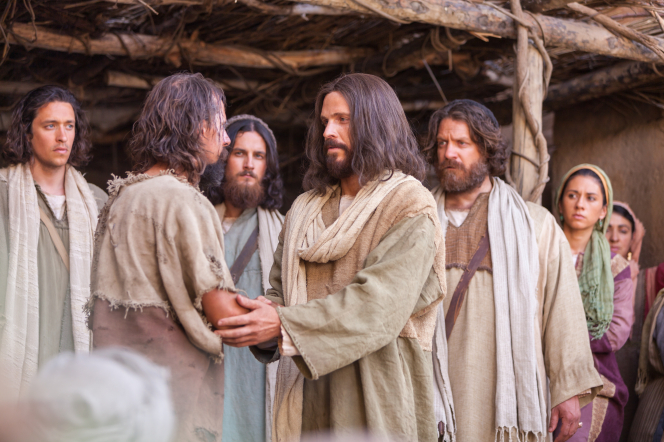
In December 2016, President Uchtdorf said:

To put it simply, having charity and caring for one another is not simply a good idea. It is not simply one more item in a seemingly infinite list of things we ought to consider doing. It is at the core of the gospel—an indispensable, essential, foundational element. Without this transformational work of caring for our fellowmen, the Church is but a facade of the organization God intends for His people. Without charity and compassion we are a mere shadow of who we are meant to be—both as individuals and as a Church…. No matter the outward appearance of our righteousness, if we look the other way when others are suffering, we cannot be justified. [14]


[1] Elder Dallin H. Oaks, Church News, “Church Updates Resources Addressing Same-Sex Attraction” Contributed by Camille West, October 25, 2016. See also www/mormonandgay.lds.org/articles/love-one-another-a-discussion-on-same-sex-attraction

[2] Elder Dallin H. Oaks, “Same-Gender Attraction” Ensign, October, 1995, p. 10

[3] Ibid

[4] Michael Otterson, “Church Reponds to HRC Petition: Statement on Same-Sex Attraction”, October 12, 2010 http://www.mormonnewsroom.org/article/church-mormon-responds-to-human-rights-campaign-petition-same-sex-attraction

[5] Dallin H. Oaks April 2012 General Conference, “Protect the Children”  https://www.lds.org/general-conference/2012/10/protect-the-children?lang=eng#note10

[6] On original mormonsandgays.org main page. https://web.archive.org/web/20161025015242/http://mormonsandgays.org/

[7] Elder Quentin L. Cook, Church News, “Church Updates Resources Addressing Same-Sex Attraction” Contributed by Camille West, October 25, 2016. See also at https://mormonandgay.lds.org/videos?id=15209571875228076146#d.

[8] Elder Neil L. Andersen, “Spiritual Whirlwinds,” General Conference, April 2014

[9] Elder Ronald A. Rasband  Facebook post Sept. 29, 2015

[10] Elder Ronald A. Rasband BYU devotional Sept. 15, 2015

[11] Sister Carol F. McConkie, First Counselor, Young Women General Presidency, “Lifting Others” video https://mormonandgay.lds.org/videos?id=9655787446538818627

[12] Elder Dallin H. Oaks, video “Love and the Law” https://mormonandgay.lds.org/videos?id=7254846371177561723

[13] President Uchtdorf General Conference April, 2016. “He Will Place You on His Shoulders and Carry You Home”

[14] President Uchtdorf Address to the Salt Lake City Inner City Mission, given December 4, 2015
Filed Under: Homosexuality, Suicide, Youth

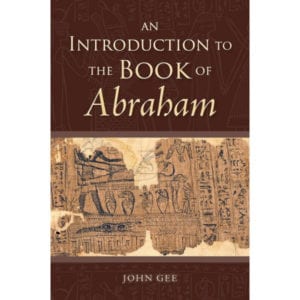
Book Review: An Introduction to the Book of Abraham

October 6, 2017 by FAIR Staff

10% off at the FairMormon Bookstore

Click to purchase the book.

[Another FairMormon member, Rene Krywult, has contributed a second review of this book.]

“The goal with the Introduction to the Book of Abraham is to make reliable information about the Book of Abraham accessible to the general reader.” With these words, John Gee begins his new book.

And it is a high goal the well-known Egyptologist, professor of Egyptology at Brigham Young University and the William (Bill) Gay Research Chair, author of over a hundred academic papers on Egyptology and ancient scripture, and researcher of the Book of Abraham for more than 25 years, sets for himself. How to do justice to a topic that is specialized enough that only a few experts in the world can speak about it with authority, and how to do it in a language that the interested lay man can understand? How to do it, with a topic that has been controversially debated for the last 105 years, often with far more zeal than knowledge? How to do it, when there is so very much to discuss and to know on one hand, and yet the “common knowledge” is almost nonexistent?

So, the good thing here: This is an introduction. Gee is not only an expert on the Egyptian but also masters the English language. The book is very easy to read. Nevertheless, there is much information to impart, and Gee does so by introducing us to the topics, all with the well researched and documented footnotes one expect from a scholar of such caliber, only to follow up with an extensive “Further Reading” section at the end of each chapter, a bibliography with explanations. This way, he who wants to know more knows what books to buy and what articles to read.

To do this work justice, I decided to go through the chapters one by one. [Read more…] about Book Review: An Introduction to the Book of Abraham

Filed Under: Book of Abraham, Book reviews, Joseph Smith, LDS History

Mormon Scholars Testify – Bruce E. Dale

September 11, 2017 by FAIR Staff

I was sixteen years old when I read the Book of Mormon for the first time. That book ran right over me. The Book of Mormon hit my mind and my heart in a way that no other book ever had before or ever has since. Now, over fifty years later, I have read the Book of Mormon hundreds of times. I am always reading it and always finding additional knowledge and insights.

After I was baptized a member of the Church of Jesus Christ of Latter-day Saints, I read the other revelations given to Joseph Smith, including those recorded in the Doctrine and Covenants and also in the Pearl of Great Price. These books spoke and continue to speak to my mind and my heart with great power. In the revelations given to Joseph Smith, and in the Bible, I hear the voice of God, my Heavenly Father, and of my Redeemer, Jesus Christ.

And in these books I have found very soul-satisfying answers to some of the “big questions” of eternity.

Which “big questions”? Well, two to start with. First, what is the universe for? Second, what is humankind’s place in the universe?

Continue reading…

Filed Under: Latter-day Saint Scholars Testify

Mormon Scholars Testify – Jonathan Westover

August 28, 2017 by FAIR Staff

I cherish my testimony of my Savior and of God.

As a brief background, I was born into a well-educated, large, lower middle class Mormon family and was faithfully raised in the church. As I grew up in the Pacific Northwest, many of my good friends were not LDS and I had ample opportunity to interact with individuals from other faith traditions and backgrounds. As a kid, I definitely remember many occasions of feeling God’s love for me, but I mostly just believed because of my parents and because I felt that was what was expected of me. It wasn’t until I was later into my teenage years and preparing to serve a two-year LDS mission that I starting examining myself and my faith. It was at this time that I was exposed to challenging issues in the church. For a time, I questioned not only the truthfulness of the church, but whether or not there really was a God. This was a very difficult time for me, as I felt that everything I had learned my entire life, even my very identity, might be false. However, during all of this, I continued attending church, reading the scriptures, and saying my personal prayers (more fervently than ever before in my life). I just wanted God, in some way, to make himself known to me and to reassure me that I was loved by him.

At first, things started slowly. I often felt I was praying to no one at all, but with continued study, prayer, and self-reflection, I came to accept that despite the concerns I had with the church and some aspects of its history, culture, and the imperfections of its leadership, I knew that overall the church was a good institution doing good things for millions of people around the world. As I continued to pray earnestly, over time I developed my testimony and belief that my Heavenly Parents are real and that they do love me. At this point, I decided to serve a mission (though I had not yet determined for myself whether or not I believed the church to be “True,” I knew either way I would be serving God through serving others).

Continue reading…

Filed Under: Latter-day Saint Scholars Testify

The Book of Mormon as a Second Witness to the Divinity of Jesus Christ

December 11, 2016 by FAIR Staff

https://media.blubrry.com/mormonfaircast/www.fairlatterdaysaints.org/wp-content/uploads/2016/12/FairMormon-Christmas-2016.mp3

Podcast: Download (28.0MB)

Subscribe: RSS

“To him give all the prophets witness, that through his name whosoever believeth in him shall receive remission of sins”. Acts 10:43 King James Version (KJV)

In this FairMormon Christmas Podcast, Neal Rappleye discusses the Book of Mormon as a second witness to the birth, atonement, and death of Jesus Christ –with an emphasis on the Christmas story. We begin with the Biblical witness of Christ, and then discuss prophets in the Book of Mormon who testify further of Christ’s mission: Nephi, King Benjamin, Alma, Samuel the Lamanite, and Nephi: descendant of Alma.

Music by Paul Cardall

Neal Rappleye has been doing ongoing research on the Book of Mormon for several years. His work has been published by Interpreter: A Journal of Mormon Scripture, FairMormon, the Book of Mormon Archaeological Forum, LDS.net, and Meridian Magazine. He presented at the 2014 and 2016 Book of Mormon Lands Conferences, and is the co-recipient of the 2013 John Taylor Defender of the Faith Award from FairMormon. As a Research Project Manager for Book of Mormon Central, Neal selects, writes, and reviews content for KnoWhys, and oversees the production of the accompanying social media products. As Operations Manager, Neal oversees the daily tasks and operations of the Book of Mormon Central staff. Neal maintains a personal blog, Studio et Quoque Fide (By Study and Also By Faith), http://www.studioetquoquefide.com/.

Julianne Dehlin Hatton has worked as a News Director at an NPR affiliate, Broadcast News Anchor and Airborne Traffic Reporter. She graduated with a Master’s degree from the Maxwell School of Citizenship and Public Affairs at Syracuse University in 2008. Julianne and her husband Thomas are the parents of four children.

Filed Under: Book of Mormon, Podcast Tagged With: bible, Book of Mormon, Book of Mormon Central, Historical Jesus

Why Build Temples?

October 18, 2016 by FAIR Staff

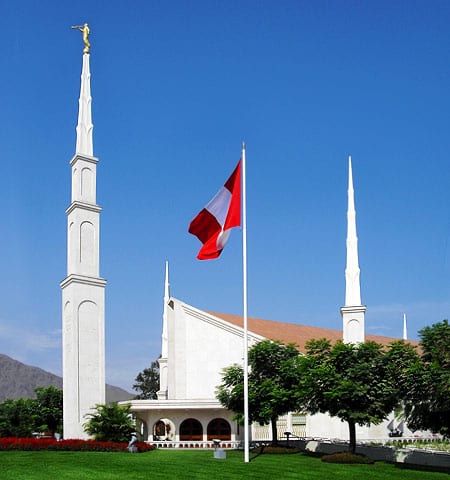
The Lima Peru Temple

This week, critics of the Church of Jesus Christ of Latter-Day Saints have again been opining online on the extravagant furnishings inside LDS temples. The implication being that this is a dreadful waste of money on expensive edifices when the funds could be spent on assisting the poor. A first glance, this complaint appears reasonable. Why indeed should so much funds be devoted to building temples rather than to poverty relief?

We all know that poverty relief consists of two types, handling out bread and fishes, that can sustain a man and his family for a few days, or handing out a fishing pole and seeds, together with instructions on how to catch fish and grow grain, that will sustain the man and his family for months and years to come.

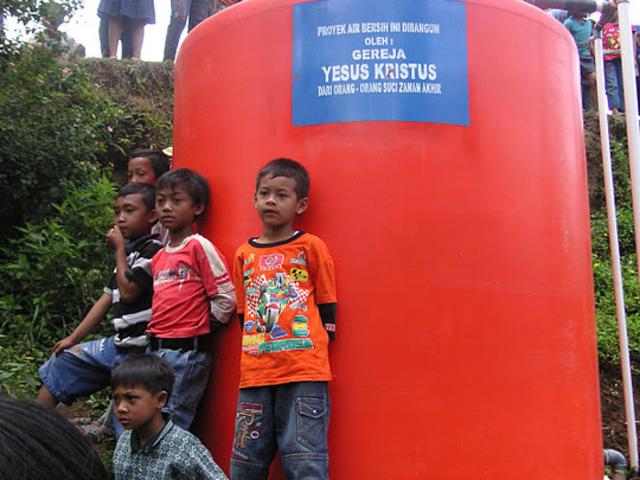
Fresh water is flowing for the first time to villages in Indonesia.

The Church does both of the above kinds of relief, in the form of emergency assistance, or in such wonderful programs as the Perpetual Education Fund. But there is another form of assistance that vastly exceeds either of these types. In countries like Peru (or Ghana, or many other places), the Church has built temples, to which any member holding a recommend may attend, no matter what his or her social status may be.

Inside the temple, no one can tell who is the Peruvian peasant or who is the banker from Lima. All are alike (even in dress), and all are treated the same.

Can you imagine what this does to the self-esteem of that Peruvian peasant (or, indeed, to the viewpoint of the banker)? The temple is the Great Leveler, and unlike the Marxist ideal where everyone is supposed to be leveled down to the proletariat, it levels everyone up, to become kings and queens.

No amount of poverty relief, no matter how lavishly dispensed, could possibly achieve such a remarkable outcome. When viewed from this angle, the amount the Church spends on temple construction could be considered more effective than any other outlay.

All this, even before considering the religious aspects of this work (ie, that God commanded it, or that temples are an essential element in LDS theology in the work of salvation for all mankind).

But this is not just an LDS theme. In my opinion, religious edifices have always elicited such responses. The great cathedrals of Europe were built at great expense, by the elite of society, but also with the enthusiastic participation of the lower classes, who saw these structures as their own. (This adoration does not extend to secular buildings, btw. When I toured Versailles back in 1991, my first thought was “Now I know why they had the French Revolution.”) The theme also holds true in non-Christian societies. The Great Buddha of Nara, constructed in the 8th century when Nara was the capital of Japan, was a project that encompassed all layers of society (it included raising a wooden structure to house the statue that is the largest purely wooden building in the world), and it is an awe-inspiring sight even now, more than 1200 years later.

Celestial Room in the Accra Ghana Temple

And, of course, in the LDS context (as in the above non-LDS examples), the temples must be built of the highest quality materials possible. This serves to cement the leveling-up effect. Even the Church’s outlays for the downtown shopping mall in Salt Lake City, which has elicited such scorn from critics, is a part of this same effort, by upgrading the environment around the Salt Lake Temple (and Conference Center), so that members visiting from faraway places can feel safe and secure.

This entry was posted in Temples on 17 November 2014 by David Farnsworth

Filed Under: Anti-Mormon critics, Apologetics, Marriage, Temples Tagged With: LDS Temples, Peru

Interview with Dr. Louis C. Midgley

October 8, 2016 by FAIR Staff

https://media.blubrry.com/mormonfaircast/www.fairlatterdaysaints.org/wp-content/uploads/2016/10/Midgley-Interview-2016.mp3

Podcast: Download (45.0MB)

Subscribe: RSS

louis-midgley2

This week’s interview on the Mormon FAIRCast is with is with Dr. Louis C. Midgley. He was born and raised near Salt Lake City. He received a bachelor’s degree and a master’s degree from the University of Utah, and, after teaching for a year at Weber State University, he and his wife moved to Providence, Rhode Island, where he received his Ph.D. from Brown University in the political science department. He taught the history of political and legal philosophy for thirty-six years at Brigham Young University, from which he retired in 1996.

Dr. Midgley has had an abiding interest in the history of Christian theology. He wrote his doctoral dissertation on Paul Tillich, the then-famous German-American Protestant theologian and political theorist/religious-socialist activist. Midgley also studied the writings of other influential Protestant theologians such as Karl Barth. Eventually he took an interest in contemporary Roman Catholic theology, and was also impacted by the work of important Jewish philosophers, including especially Leo Strauss and his disciples.

Beginning with its first issue in 1989, he was a regular contributor to the FARMS Review, which soon became the flagship publication of the Neal A. Maxwell Institute for Religious Scholarship. He eventually also had the pleasure of serving as one of its associate editors until it was cancelled in 2011. He then began serving as a contributing editor for Interpreter: A Journal of Mormon Scripture in 2012.

Dr. Midgley served two missions to New Zealand—the first in 1950-52 and the second, with his wife, in 1999-2000, during which they directed the Lorne Street Institute of Religion, in Auckland.

He is married to the former Ireta Troth, of Bountiful, Utah. They are the parents of two sons and a daughter.

Dr. Midgley’s wife passed away on 3 February 2014 from an unexpected catastrophic event following successful surgery at the Huntsman Cancer Hospital. He is now without the immediate companionship of his beautiful wife. He lives with a firm hope that he will eventually be reunited with her.

Dr. Midgley’s testimony can be found at Mormon Scholars Testify.


Filed Under: Apologetics, Faith and Reason, Julianne Dehlin Hatton Tagged With: apologetics, Book of Mormon Geography, Brown University, Camerion Club, Faith and Reason, Lou Midgley, New Zealand, Podcast

Elder Jeffrey R. Holland Addresses Religious Persecution Conference in the UK

September 24, 2016 by FAIR Staff

Elder Jeffrey R. Holland addresses humanitarians, scholars, faith and government leaders at a conference sponsored by the AMAR Foundation at Windsor Castle in the United Kingdom titled “Religious Persecution: The Driver for Forced Migration.”

Details about the address can be found on the Mormon Newsroom website.


Filed Under: Uncategorized Tagged With: Elder Jeffrey R. Holland, Forced Migration, Gospel topics, Religious Persecution, War

Will You Engage in the Wrestle?

September 18, 2016 by FAIR Staff

“Questions are not just good, they are vital, because the ensuing spiritual wrestle leads to answers, to knowledge, and to revelation. And it also leads to greater faith” –Sheri Dew

https://www.youtube.com/watch?v=jdL4PfBhGyg

From a BYU Idaho Devotional on May 17, 2016

It is a privilege to be here-especially with President and Sister Gilbert. They are dear friends and remarkable exemplars. Now, we are not here today to listen to me speak. We are here to receive revelation. I invite you to invite the Holy Ghost to speak to you so that you hear what you need to hear.

A couple of years ago a reporter from an international broadcasting network visited Salt Lake City researching a story on women in the Church. She was intrigued that a female was leading a Church-owned media company and asked me for an interview.

I liked this reporter. She’d done her homework and asked good questions, though one of them was predictable: “How do you feel about not being eligible for priesthood ordination?” I outlined the extensive leadership opportunities women have in the Church and then explained that, as a woman endowed with power in the temple, I had complete access to God’s power-or priesthood power-for my own life. And I explained that my focus had long been on learning how to gain full access to that power.

She paused and then asked: “Are you saying that you believe you have more access to God’s power than I do?”

What a loaded question! My brain began to spin in search of a truthful but politically correct answer. But I couldn’t bring myself to sell our doctrine or our privileges as women short. So finally I said, “Well, actually …yes.”

“Now, do not misunderstand what I’m saying,” I quickly added. “I am not saying the Lord loves me more than He loves you or that I’m better than you. I’m not saying that He is more likely to bless me than you. But if you’re asking if I believe I have greater access to God’s power than you do, the answer is yes! That is one of the blessings of joining this Church. We believe that when we make promises to God to follow His Son, He in turn makes promises to us. And one of those promises is that He will give us greater access to His power.”

As I spoke, the Spirit filled the room and disarmed her. Her demeanor softened, and then she asked how the gospel affects me personally. She basically opened the door for me to testify.

I told her that Jesus Christ hasn’t just made a difference in my life, He has made all the difference. That every good thing that has ever happened to me has come because of my membership in His Church. And that I have experienced the Savior’s healing, enabling power again and again.

At that point, the Spirit flooded the room and we were both in tears. She finally said, “That is beautiful.” That day I experienced the sublime beauty of standing as a witness and bearing witness of truth.

Consider the miracle of it! Through the power of the Holy Ghost,[i] we can know what is true with enough surety to testify of truth.

We can only bear witness of what we know. We can’t testify of a wish or a hope or even a belief. We can express a hope, a wish, or a belief. But we cannot stand as witnesses of Jesus Christ unless we can bear witness of Him.[ii] We can defend the faith only if we have faith.

Our society seems determined to set aside any semblance of faith or right and wrong. But the world’s condition today is no surprise to the Lord, who told the Prophet Joseph that we are living in the “eleventh hour,” that this is the last time He will call laborers into His vineyard, and that His vineyard has become “corrupted.”[iii] But the Lord also declared that in the midst of all this moral and spiritual chaos, the fullness of His gospel would be “proclaimed by the weak and the simple unto the ends of the world.”[iv] And He promised that if we would open our mouths, they would be filled.[v]

You and I are “the weak and the simple,” but we are not here now by accident or without the Lord’s endorsement. President George Q. Cannon taught that “because of the…magnitude of the work to be accomplished… [it] has required apparently the most valiant men and women to come forth [now]…God has reserved spirits for this dispensation who have the courage and determination to face the world and all the powers of the evil one…and [to] build up the Zion of our God fearless of all consequences.”[vi]

Make no mistake about it: You are here now because in the beginning our Father chose you to be here now. And He has hard work for you to do.

How, then, do we strengthen our faith so that we can defend the faith?

Four years ago, a marvelous young woman who had just graduated with honors from BYU called me, distraught. Through sobs she blurted, “I’m not sure I believe the Church is true anymore, and I’m scared. What if  my family isn’t going to be together forever?”

I asked, “Do you want a testimony?” “Yes,” she said.

“Are you willing to work for it?” Again, “Yes.”

And she was. She had a great bishop and an off-the-charts Relief Society president, both of whom worked with her. Friends and family came to her rescue. And she and I began to meet for gospel study sessions. I told her, “Bring your scriptures and every question you have. Questions are good. Let’s see what the Lord will teach us.”

She took me at my word and brought one thorny question after another. We searched the scriptures and the teachings of prophets for answers. Little by little, she began to realize that just because she had questions didn’t mean she didn’t have a testimony. The scriptures are filled with accounts of prophets who had questions. And she began to recognize when the Spirit was bearing witness to her-including bearing witness that prophets, seers, and revelators are truly prophets.

Her testimony began to grow, and time passed. Then about a year ago she called again. “I wanted you to be one of the first to know that I am holding in my hand a temple recommend. Will you come when I receive my endowment?” Then she added, “Do you know what you said that helped me the most? You told me that questions are good, and that allowed me to see myself as a seeker rather than a doubter.”

I was overjoyed! But two days later, I received a much different call from another BYU graduate. “Sister Dew,” she said, “before you hear it from someone else, I want you to know that I’m pregnant.” She said that for several years she had doubted the truthfulness of the gospel and had finally decided there was no reason to live the law of chastity.   

I told her that I was not her judge and that I loved her. Then I asked her if she would like to have a testimony. “No, I don’t think so,” she said.

The contrast was stunning. At about the same time, these two young women had questions that threatened their testimonies. One of them sent out a cry for help, and family, friends and leaders followed President Monson’s counsel and went to her rescue. The other girl nursed her doubt and convinced herself that her immoral choices were acceptable. I love and care about this girl. But for now, she has chosen a spiritually perilous path.

One girl’s questions propelled her to become a seeker of truth. The other girl used her questions to justify her immorality.

My dear friends, questions are good. Questions are good if they are inspired questions, asked in faith, and asked of credible sources where the Spirit will direct and confirm the answer.[vii]

Nephi asked an inspired question in faith when he asked the Lord if he could see what his father saw. The Lord responded by showing Nephi the tree of life, the iron rod, the great and spacious building and mists of darkness, and the fruit of the tree, which is “sweet above all that is sweet.”[viii]

And the vision didn’t stop there. Nephi saw the birth, ministry, and Crucifixion of the Savior. He saw the coming forth of latter-day scripture, the Restoration, and the building of latter-day Zion.

Nephi saw all this and much more, only to return to his father’s tent and find Laman and Lemuel arguing about the meaning of their father’s vision. When Nephi asked them, “Have ye inquired of the Lord?” they gave the classic response of doubters: “We have not; for the Lord maketh no such thing known unto us”-as though nothing was required of them.[ix]

None of us are entitled to revelation without effort on our part. Answers from God don’t just magically appear. If we want to grow spiritually, the Lord expects us to ask questions and seek answers. “If thou shalt ask,” He promised, “thou shalt receive revelation upon revelation, knowledge upon knowledge….”[x] How much clearer can it be? The Lord loves inspired questions asked in faith because they lead to knowledge, to revelation, and to greater faith.  

We all have questions. Some are doctrinal, historical, or procedural. Some are intensely personal. Here are just a few of the questions men and women your age have asked me recently:

Why am I the only one in my family who struggles to believe?

Should I serve a mission if my parents don’t want me to?

Why did I spend all that time on a mission and not convert anyone?

Why can’t I find “the one?”

If I go to graduate school, will the Lord think that means I don’t want to get married? Will I be able to provide for a family today?

Will the Lord ever forgive me for breaking my covenants?

I came home early from my mission. What do I do now?

Is a prophet infallible?

Did Joseph Smith really have more than one wife?

How do I know if I’m receiving revelation?

Do I dare get serious with a guy who has struggled with pornography?

Why can’t women be ordained to the priesthood?

What if the Church’s position on gay marriage bothers me?

How do I understand the temple when I can’t ask questions about it?

May I answer these questions, and any questions you may have, by posing a question: Are you willing to engage in the wrestle? In an ongoing spiritual wrestle?

Enos described the “wrestle that he had before God to obtain a remission of his sins.”[xi]And Alma “[wrestled] with God in mighty prayer.”[xii]

Champion wrestlers tell me that it isn’t necessarily the strongest wrestler who wins. It is the wrestler who knows how to leverage his strength to overpower his opponent. Spiritual wrestling leverages the strength of true doctrine to overpower our weaknesses, our wavering faith, and our lack of knowledge. Spiritual wrestlers are seekers. They are men and women of faith who want to understand more than they presently do and who are serious about increasing the light and knowledge in their lives.

I recently engaged in a wrestle. When the policy was announced that the children of gay parents might not be eligible for baptism at age eight, I was confused. I did not question the Brethren or doubt their inspiration, but neither did I understand the doctrinal basis for the policy. So I asked the Lord to teach me. I prayed, searched the scriptures, studied the teachings of prophets, and pondered my question in the temple. This went on for several months. Then one day a colleague made a statement that sparked a new thought for me, and in that moment the Spirit illuminated the doctrine in my heart and mind. I consider that answer personal revelation and not something I should teach. Though I have wept with friends to whom this policy directly applies, the doctrine gave me peace and understanding.[xiii]

When we have unresolved questions, our challenge doesn’t lie in what we think we know. It lies in what we don’t yet know.

The Lord has promised to open the “eyes of our understandings”[xiv] and to reveal “all mysteries.”[xv] But He isn’t likely to do either of these unless we seek to know. Truman Madsen taught that he could find “nothing in the scriptures…to excuse anyone from brain sweat and from the arduous lifetime burden of seeking ‘revelation upon revelation, knowledge upon knowledge.'”[xvi] He was describing an ongoing spiritual wrestle.

The Lord wants us to ask every probing question we can muster because not asking questions can be far more dangerous than asking them.[xvii] In other words, sin makes you stupid-and so does refusing to seek after truth.

Remember my friend who thought she’d lost her testimony? Her doubt was triggered by a television drama featuring a scientist who didn’t believe in God. I said, “You mean that a fictional character fabricated by a Hollywood writer has obliterated 24 years of gospel teaching?” “But she’s so smart,” my friend said.

There have always been and will always be charismatic men and women who can launch what sound like, on the surface, reasoned arguments against the Father and the Son, the Restoration, the Prophet Joseph, the Book of Mormon, and living prophets. But doubters and pundits never tell the whole story, because they don’t know the whole story-and don’t want to know. They opt for clever sound bites, hoping no one digs deeper than they have.

Sound bites will never lead to a testimony. As seekers of truth, our safety lies in asking the right questions, in faith, and of the right sources-meaning those who only speak truth: such as the scriptures, prophets, and the Lord through the Holy Ghost.

President Spencer W. Kimball declared, “Why, oh, why do people think they can fathom the most complex spiritual depths without the necessary…work accompanied by compliance with the laws that govern it? Absurd it is, but you will…find popular personalities, who seem never to have lived a single law of God, discoursing…[about] religion. How ridiculous for such persons to attempt to outline for the world a way of life!…One cannot know God nor understand his works or plans unless he follows the laws which govern.”[xviii]

Questions are not just good, they are vital, because the ensuing spiritual wrestle leads to answers, to knowledge, and to revelation. And it also leads to greater faith.

Men and women of faith are expected to have faith. While the Lord will reveal many things to us, He has never told His covenant people everything about everything. We are admonished to “doubt not, but be believing.”[xix] But “doubting not” does not mean understanding everything.

Doubting is not synonymous with having questions. To doubt is to reject truth and faith. As covenant sons and daughters, we are required to have faith, live by faith, “ask in faith, nothing wavering,”[xx] and “overcome by faith.”[xxi] Learning by faith is as crucial as learning by study, because there are some things we cannot learn from a book.[xxii]

Elder Dallin H. Oaks underscored this truth: “[A]fter all we can publish, our members are sometimes left with basic questions that cannot be resolved by study…Some things can be learned only by faith. Our ultimate reliance must be on faith in the witness we have received from the Holy Ghost.”[xxiii]

Thus, once the Spirit has borne witness to you that God is our Father and Jesus is the Christ, that Joseph Smith was a prophet called to restore the gospel, and that we are led by a prophet today, then you know the gospel is true because the Spirit has borne witness of the foundational truths that comprise a testimony. You have a testimony!

At that point, when questions arise or when blessings you’ve been pleading for remain unfulfilled, they are not an indication that you don’t have a testimony or that the gospel isn’t true. They are an invitation for you to grow spiritually.

I repeat, once you have received a spiritual witness of the truths that form a testimony, even your thorniest questions about our doctrine, history, positions on sensitive issues, or the aching desires of your hearts, are about personal growth. They are opportunities for you to receive personal revelation and increase your faith.

We don’t have to have answers to every question in order to receive a witness, bear witness, and stand as a witness.

But questions, especially the tough ones, propel us to engage in a spiritual wrestle so that the Lord can lead us along. Without plain old spiritual work, even God can’t make us grow-or at least, He won’t.[xxiv]

My life has been filled with spiritual wrestling-not because of any great valor on my part but because I have yearned to understand why certain things were happening to me, and why others were not. For decades I have fasted, prayed and pleaded for a husband. I’ve asked who he is, where he is, and when he’s coming. As of today, I still don’t know the answer to any of those questions. But the wrestle has blessed me with the knowledge that Jesus Christ is my Savior, that His gospel is filled with power, and that God will talk to and direct me.

Growing spiritually and receiving answers to our questions depends  upon our ability to feel, hear, and understand the whisperings of the Spirit. It is worth engaging in a spiritual wrestle to learn to receive personal revelation, because we can only know what is true when the Spirit bears witness to our hearts and minds as only the Holy Ghost can.[xxv]Revelation must include both, because intellect alone cannot produce a testimony. You cannot think your way to conversion, because you cannot convince your mind of something your heart does not feel.[xxvi]

The Prophet Joseph declared that “the Holy Ghost…comprehends more than all the world”[xxvii] and that we must all “grow into the principle of revelation.”[xxviii]  And President Henry B. Eyring added: “We all know that human judgment and logical thinking will not be enough to get answers to the questions that matter most in life. We need revelation from God…We need not just one flash of light and comfort, but we need the continuing blessing of communication with God.”[xxix] Every truth-seeking member of the Church can and should be receiving revelation for his or her life.

In my early twenties, I faced a difficult decision and asked a friend for a priesthood blessing. He asked what the Lord had already told me, and I admitted that I could feel the presence of the Spirit but couldn’t discern specific revelation. He then asked if I had ever asked the Lord to teach me what it felt like when He was speaking to me? I hadn’t. But that night, I began to ask the Lord to teach me the language of revelation.

That was forty years ago, and over time I have come to know that what President Boyd K. Packer taught is true: That “if all you know is what you see with your natural eyes and hear with your natural ears, then you will not know very much.”[xxx]

Seekers have certain habits that are key to learning to communicate with God. For starters, they engage in the wrestle, meaning they work at it. They immerse themselves regularly in the scriptures, because the scriptures are the textbook for the Lord’s language. They also work to be increasingly pure-pure in their heart and thoughts, pure in what they say, watch, read, and listen to. Purity invites the Spirit. And then, pure seekers listen. One of my former institute students periodically turns everything electronic off. TV off. Music off. Phone off. Computer off. She says, “I like to let the Lord know I’m listening.”

As you cultivate these spiritual habits, there are two questions that will help open the heavens. First, ask the Lord to teach you what it feels and sounds like for you when He is speaking to you via the Holy Ghost, and then watch how He tutors you. And, second, if you’ve never asked the Lord how He feels about you, that is a great question to ask. In time, He will tell you, and as He does, you’ll learn more about speaking His language.

When the Lord sees that you want to communicate with Him, He will teach you how.

Recently, a friend working on her Ph.D. received an impression during a Relief Society conference to shift the focus of her dissertation. She also felt prompted to go directly to the temple to ask the Lord further questions. She said, “While there, I was told how to make [this new focus] work…[and] how I could be both academically unbiased and spiritually honest. I occasionally receive clear words from the Spirit, but never have I been given such clear instructions….The task ahead feels incredibly difficult, but I know what direction to go and that the Lord expects it of me, and that makes all the difference.”[xxxi]

Receiving revelation is the key to receiving answers to our questions. Joseph Smith promised that “even the least Saint may know all things as fast as he is able to bear them.”[xxxii]

My dear friends, make no mistake about it: we are here now because we’re supposed to be here now. And we each have a mission to fulfill. Part of that mission requires us to stand as witnesses of truth. And that means we must receive a witness that Jesus is the Christ and that His gospel has been restored.

I invite you to decide today that you will pay the price to wrestle with difficult questions, to become lifetime seekers of truth, to learn to speak the Lord’s language, and to receive a witness of Jesus Christ and the Restoration of His gospel.

If you will, you’ll have the privilege of helping prepare the earth for His return. You’ll be able to defend the faith because of your ever-increasing faith.

The Savior is going to come again. May we stand for Him and with Him.

Jesus is the Christ. This is His Church, and it is filled with His power. Of this I testify in the name of Jesus Christ. Amen.


[i] 1 Nephi 13:37. [ii] Further, we can only bear witness if we have received a witness from the Holy Ghost. [iii] See D&C 33:4. [iv]  See D&C 1: 23. [v] See D&C 33:8. [vi] George Q. Cannon, Gospel Truth, 1957, Deseret Book. [vii] “Searching “diligently in the light of Christ” is the only way to “know good from evil.” (Moroni 7:19.) [viii] Alma 32:42. [ix] Nephi went on to teach his brothers, “Do ye not remember the things which the Lord hath said?-If ye will not harden your hearts, and ask me in faith, believing that ye shall receive,…these things shall be made known unto you. (See 1 Nephi 15:8, 9, 11.) [x] D&C 42:61. [xi] Enos 1:2. [xii]Alma 8:10. Paul told the Ephesians that “we wrestle not against flesh and blood, but against principalities, against powers, against the rulers of the darkness of this world, against spiritual wickedness in high places.” (Ephesians 6: 12-13.) [xiii] Look at the life of any prophet, and you’ll find lots of spiritual wrestling. Imagine the pleadings of Joseph, sold into Egypt by jealous brothers; or Brigham Young’s, as he led a band of beleaguered converts on a trek through uncharted territory to a place he’d only seen in vision.  [xiv]D&C 76: 19. [xv] See D&C 76: 7, 8. [xvi] Truman G. Madsen, Defender of the Faith, Bookcraft, 1980, 387. Elder Richard G. Scott taught that “the Lord will not force you to learn. You must exercise your agency to authorize the Spirit to teach you. (21 Principles: Divine Truths to Help you Live by the Spirit, Deseret Book, Salt Lake City.) The scriptures repeatedly urge us to “ask, and it shall be given you; seek, and ye shall find; knock, and it shall be opened unto you.” (See Matthew 7:7; 3 Nephi 14:7; 3 Nephi 27:29.) [xvii] The scriptures are filled with warnings like this one: “Wo be unto him that saith: We have received, and we need no more.” (2 Nephi 28:27.) The Lord also said, as a further example of this point,  “Wo unto the deaf that will not hear; for they shall perish. Wo unto the blind that will not see; for they shall perish also.” (2 Nephi 9:31-32.) A pattern of not seeking help from heaven blocks revelation and leaves a person alone with downward spiraling thoughts or seeking out like-minded doubters in the blogosphere. [xviii] Spencer W. Kimball, “Absolute Truth,” BYU Devotional, 6 September 1977, found at www://speeches.byu.edu. [xix] Mormon 9:27-28.[xx] Joseph went to the grove after reading, “If any of you lack wisdom, let him ask of God….” The very next verse admonishes us to “ask in faith, nothing wavering. (James 1: 5, 6.) [xxi] D&C 76:53. [xxii] See D&C 88:118. Faith does not stand still. It is either increasing or disappearing. As President Henry B.  Eyring has said, “Faith has a short shelf life.” (“Spiritual Preparedness: Start Early and Be Steady,” Ensign, November 2005.) [xxiii] Dallin H. Oaks, “Opposition in All Things,” April 2016 General Conference. President Harold B. Lee said something similar: “It is not the function of religion to answer all the questions about God’s moral government of the universe, but to give one courage, through faith, to go on in the face of questions he never finds the answer to in his present status.” (Conference Report, October 1963, 108.)   [xxiv] President Howard W. Hunter explained that “the development of spiritual capacity does not come with the conferral of authority. There must be desire, effort, and spiritual preparation. This requires, of course,…fasting, prayer, searching the scriptures, experience, meditation, and a hungering and thirsting after the righteous life.” (Teachings of Presidents of the Church: Howard W. Hunter, The Church of Jesus Christ of Latter-day Saints, 2015, 82.) Sometimes we look upon those who have strong testimonies and wonder if faith somehow comes “naturally” for them. But even those blessed with the gift to believe must wrestle for revelation and greater faith. In fact, it is likely because of their challenges that their testimonies have been forged-and usually in the “furnace of affliction.” (See Isaiah 48:10.) [xxv] DYc 8:2-3. [xxvi] Abinadi told the wicked priests of King Noah that they had not applied their “hearts to understanding; therefore, ye have not been wise” (Mosiah 12:27; 13:11). King Benjamin told his people that true followers of Christ would have His name written in their hearts. (See Mosiah 5:12.) One way to know you’re receiving revelation is that you will have both clarity of thought and feel peace. [xxvii] This quote in context reads: “I have an old edition of the New Testament in the Latin, Hebrew, German and Greek languages….I thank God that I have got this old book; but I thank him more for the gift of the Holy Ghost….The Holy Ghost…comprehends more than all the world; and I will associate myself with him.” (Teachings of the Presidents of the Church: Joseph Smith, The Church of Jesus Christ of Latter-day Saints, 2007, 132.) Joseph Smith also said, in a frequently quoted but important statement: “God hath not revealed anything to Joseph, but what He will make known unto the Twelve, and even the least Saint may know all things as fast he is able to bear them, for the day must come when no man need say to his neighbor, Know ye the Lord; for all shall know Him…from the least to the greatest.” (Ibid., 268.) [xxviii] Teachings of the Prophet Joseph Smith, 151. The Apostle Paul taught, “Ye may all prophesy….Covet to prophesy.” (See 1 Corinthians 14:31, 39.) [xxix]Henry B. Eyring, “Continuing Revelation,” October 2014. [xxx] As quoted by David A. Bednar, “Quick to Observe,” BYU Devotional, 10 May 2005. [xxxi] Email, Susannah Bingham Buck to SLD, 18 February 2016. [xxxii] TPJS, 149. Elder Heber C. Kimball declared that “the Church has before it many close places through which it will have to pass before the work of God is crowned with victory….The time will come when no man nor woman will be able to endure on borrowed light.” (Orson F. Whitney, Life of Heber C. Kimball, 3d. edition, Salt Lake City, Bookcraft, 1945, 50.)   for transcript.

Filed Under: Uncategorized

President Scott Gordon Reviews the 2016 FairMormon Conference

September 11, 2016 by FAIR Staff

https://media.blubrry.com/mormonfaircast/www.fairlatterdaysaints.org/wp-content/uploads/2016/09/2016-Fair-Mormon-Conference-in-Mono.mp3

Podcast: Download (17.9MB)

Subscribe: RSS

FFMM

“If we can’t have a discussion, then we might as well not have a conference” –Scott Gordon

In this edition of the Mormon FairCast, President Scott Gordon reviews the 2016 FairMormon Conference held at the Utah Valley Convention Center in Provo, Utah. Gordon offers three themes from this year’s conference:

  1. Women in the church
  2. The Book of Mormon
  3. How to do apologetics

Gordon also discusses how speakers are chosen and why FairMormon invites Dr. Daniel Peterson to deliver the closing address year after year.

Gordon

President Gordon retains his belief in “Big Tent” Mormonism and says we can all be good members yet have differing opinions on topics such as feminism, Book of Mormon geography, and LGBTQ issues. Gordon says FairMormon is dedicated to standing as a witness of Christ and His restored church.

SLT

Scott Gordon has an MBA from Brigham Young University, and a BA in Organizational Communications from BYU. He is currently an instructor of business and technology at Shasta College in Redding, California. Scott has held many positions in The Church of Jesus Christ of Latter-day Saints including serving as a bishop for six years. He is married and has five children.

Julianne Dehlin Hatton  is the recipient of FairMormon’s 2016 John Taylor Defender of the Faith Award. She has worked as a News Director at an NPR affiliate, Television Host, and Airborne Traffic Reporter. She graduated from the Maxwell School of Citizenship and Public Affairs at Syracuse University in 2008. Julianne and her husband Thomas are the parents of four children.

Filed Under: Apologetics, Faith and Reason, Julianne Dehlin Hatton, Podcast Tagged With: Add new tag, apologetics, FairMormon, Julianne Dehlin Hatton, Podcast, Scott Gordon

  • « Go to Previous Page
  • Go to page 1
  • Interim pages omitted …
  • Go to page 13
  • Go to page 14
  • Go to page 15
  • Go to page 16
  • Go to page 17
  • Interim pages omitted …
  • Go to page 27
  • Go to Next Page »

Primary Sidebar

Faithful Study Resources for Come, Follow Me

Subscribe to Blog

Enter your email address:

Subscribe to Podcast

Podcast icon
Subscribe to podcast in iTunes
Subscribe to podcast elsewhere
Listen with FAIR app
Android app on Google Play Download on the App Store

Pages

  • Blog Guidelines

FAIR Latest

  • Come, Follow Me with FAIR – The Articles of Faith and Official Declarations 1 and 2 – Part 2 – Autumn Dickson
  • Come, Follow Me with FAIR – The Articles of Faith and Official Declarations 1 and 2 – Part 1 – Autumn Dickson
  • The Lord Is Hastening His Work
  • Come, Follow Me with FAIR – Doctrine and Covenants 137–138 – Part 2 – Autumn Dickson
  • Come, Follow Me with FAIR – Doctrine and Covenants 137–138 – Mike Parker

Blog Categories

Recent Comments

  • Nalo on Come, Follow Me with FAIR – The Articles of Faith and Official Declarations 1 and 2 – Part 2 – Autumn Dickson
  • Diana on Come, Follow Me with FAIR – Doctrine and Covenants 132 – Mike Parker
  • JC on The Lord Is Hastening His Work
  • LHL on Come, Follow Me with FAIR – Doctrine and Covenants 132 – Mike Parker
  • Stephen Johnsen on Come, Follow Me with FAIR – Doctrine and Covenants 132 – Mike Parker

Archives

Follow Us

  • Facebook
  • Twitter
  • iTunes
  • YouTube
Android app on Google Play Download on the App Store

Footer

FairMormon Logo

FAIR is a non-profit organization dedicated to providing well-documented answers to criticisms of the doctrine, practice, and history of The Church of Jesus Christ of Latter-day Saints.

Donate to FAIR

We are a volunteer organization. We invite you to give back.

Donate Now

Site Footer